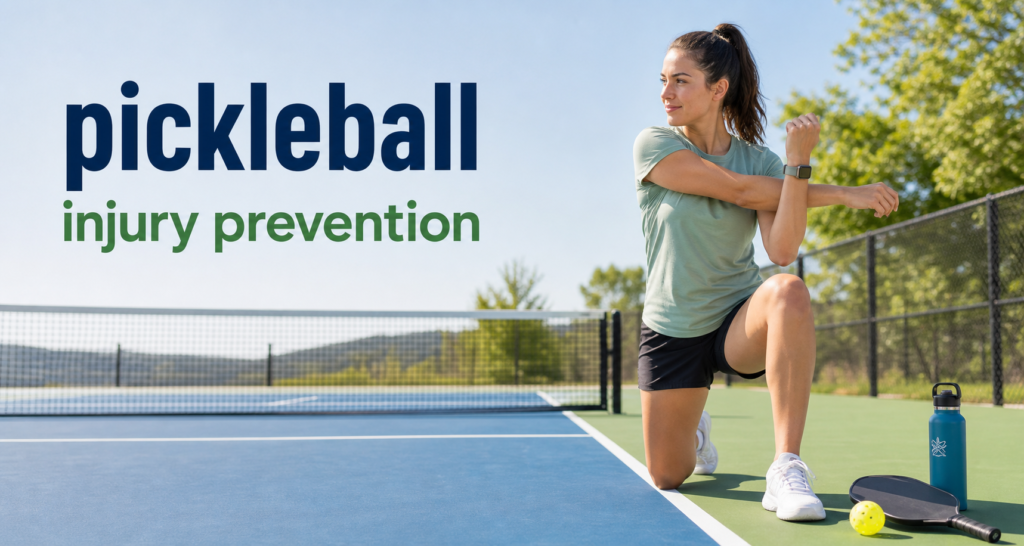
Pickleball injury prevention for beginners does not have to be complicated. If you are new to the game, a few simple habits can go a long way toward helping you stay comfortable, move better, and avoid common setbacks on the court.
Pickleball injury prevention for beginners does not have to be complicated. If you are new to the game, a few simple habits can go a long way toward helping you stay comfortable, move better, and avoid common setbacks on the court.
Why beginners get hurt
A lot of new players are excited to jump right into games without warming up, without wearing true court shoes, or without realizing how much side-to-side movement pickleball actually requires. That combination can lead to preventable pain and frustration.med.stanford+1
Many pickleball injuries for beginners happen because people do too much too fast. Long sessions, poor footwear, tight muscles, and trying to chase every ball can all increase your risk.
If you’re new to the game, our How to Play Pickleball for Beginners guide can help you build confidence with the basics before you step on the court.
Pickleball warm-up exercises
One of the easiest ways to improve pickleball injury prevention is to warm up before you play. Dynamic movement is usually a better choice than standing still and doing long passive stretches before a match.
Try these pickleball warm-up exercises before you step on the court:
- Light jogging or brisk walking for 2 to 3 minutes.
- Arm circles and shoulder rolls.
- High-knee steps or butt kicks.
- Walking lunges.
- Side shuffles across the court.
- Gentle torso twists.
Even a short 5 to 10 minute warm-up helps your body handle quick stops, pivots, reaching, and overhead movement more safely.
Wear the right shoes
If you want to avoid pickleball injuries, shoes matter more than many beginners realize. Running shoes are built for forward motion, while pickleball and tennis shoes are made to support side-to-side movement and quick changes in direction.
Wearing the wrong shoes can increase the chance of ankle rolling, slipping, or feeling unstable during play. If you already have knee or foot discomfort, proper court shoes become even more important.
Wearing proper court shoes can make a big difference in stability and comfort, so check out our pickleball shoes guide for beginners if you’re not sure what to buy.
Build up slowly
One of the best pickleball safety tips is to ease into the game instead of treating your first few weeks like a tournament season. Your enthusiasm may be ready for two-hour sessions, but your joints and soft tissue may not be there yet.
Start with shorter games, take breaks, and pay attention to fatigue. Tired legs and tired feet often lead to sloppy movement, and sloppy movement can turn into injury.
Once you have your basic gear, a dedicated bag makes it easier to carry shoes, water, braces, and court essentials, so here’s our guide to the best pickleball bags for beginners
Listen to pain early
Soreness and fatigue can be normal when you are learning a new sport, but sharp pain is different. If something feels suddenly painful, unstable, or clearly worse as you keep playing, stop and reassess.
This is especially important for the ankle, knee, calf, shoulder, wrist, and elbow. Catching a small problem early is one of the simplest ways to avoid pickleball injuries getting worse.
Use beginner-friendly movement habits
A lot of pickleball safety tips are really movement tips in disguise. You do not need to dive for every ball, backpedal recklessly, or lunge for shots you are unlikely to reach.
As a beginner, focus on:
- Small, controlled steps.
- Staying balanced before swinging.
- Turning and moving your feet instead of twisting awkwardly.
- Letting some balls go instead of forcing a bad reach.
That approach not only helps with pickleball injury prevention, but also improves consistency and confidence.
Quick beginner checklist
Before you play:
- Do 5 to 10 minutes of pickleball warm-up exercises.
- Wear court shoes with good traction and support.
- Bring water and plan a reasonable session length.
While you play:
- Move under control.
- Take breaks when you feel overly tired.
- Stop if pain becomes sharp or persistent.
After you play:
- Walk a few minutes to cool down.
- Stretch gently if you feel tight.
- Rest if a joint feels irritated.
Closing
Pickleball injury prevention is really about doing the small things well. Warm up, wear the right shoes, pace yourself, and listen to your body before a minor issue turns into time off the court.
If you are just getting started, those habits will help you stay safer, play longer, and enjoy the game a lot more.
If you want beginner-friendly shirts and hats that show your love for pickleball, you can browse my Pickleball Dink Cafe Etsy shop for fun gear that’s easy to wear on and off the court